

Collective + Coffee Recap
Grace Care Center Foundation | The Collective Gathering
February 19, 2026
Thank you to everyone who joined us for our recent Collective + Coffee gathering. It was a meaningful morning of connection, vision, and celebration of what God is doing through Grace Care Center.

Monthly supporters gathered at Grace Care Center to grow in community and learn more about what’s new at Grace Care Center.
The Collective, which is our community of monthly supporters, provides the steady, predictable support that keeps the Care Center operating week after week. Because of you, families across Central Indiana can access food, financial coaching, vehicle support, English classes, and so much more.
Looking Ahead: Vision 2028
Pastor Marcus Casteel shared that when Grace Care Center first opened in 2012, it was intended to run for just three months as a test. On that first night, pastors and volunteers prayed that at least two families would come (and no more than 200!). Seventeen families walked through the doors. The need grew week by week, and Grace Care Center never closed.
Over the past 13 years, Grace Care Center has created its programs by responding to needs as they arose. Recently, thanks to funding support from the Hamilton County Community Foundation and Grace Care Center Foundation, the Care Center team completed a strategic planning process to prepare for the next decade of service across Central Indiana.
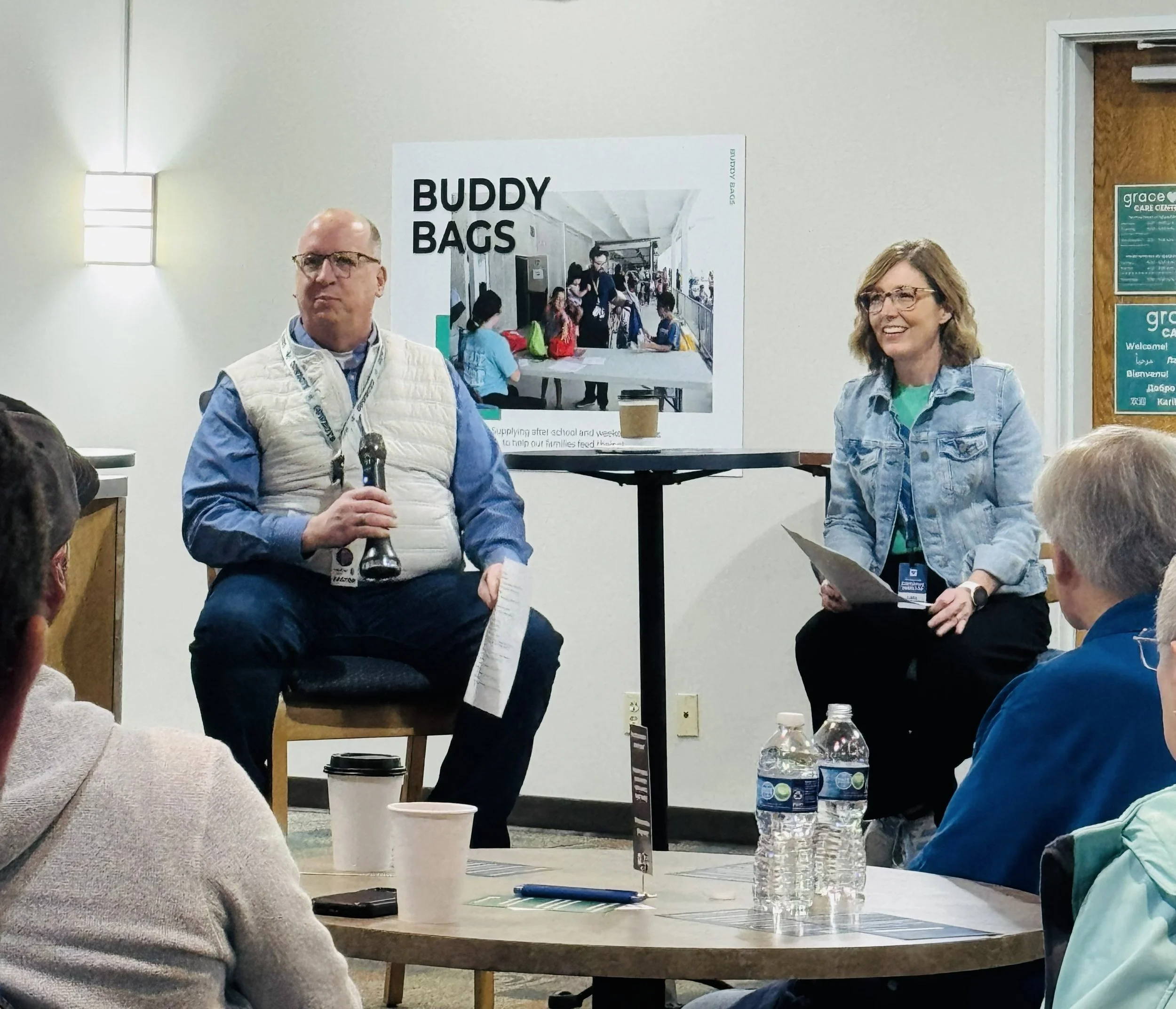
Pastor of Grace Care Center Marcus Casteel and Grace Care Center Foundation Executive Director Cara Augspurger share more about the Care Center’s recent strategic plan.
By 2028, goals include:
Serving 700+ families weekly through the Choice Food Pantry
Expanding English classes to 350+ students
Growing Cooperative Services to engage 150 families
Increasing vehicle services to impact 300+ individuals
Launching new initiatives in mental health and housing
Building a 15-organization Care Center Coalition of churches and partner organizations
Strengthening operational excellence and financial sustainability
We are intentionally moving from reactive service to long-term solutions.
What Is “Cooperative Services” (The Co-Op)?
Many families begin with food assistance. But food is often just the entry point.
Cooperative Services (Co-op) pairs families with volunteer mentors who walk alongside them for 18–24 months. It’s very much a cooperative collaboration with Care Center Friends doing a lot of hard work and volunteer mentors and coaches helping guide them through individualized milestones.
The Co-op is a core Care Center service and has recently expanded to welcome more families looking for long-term, sustainable life change.
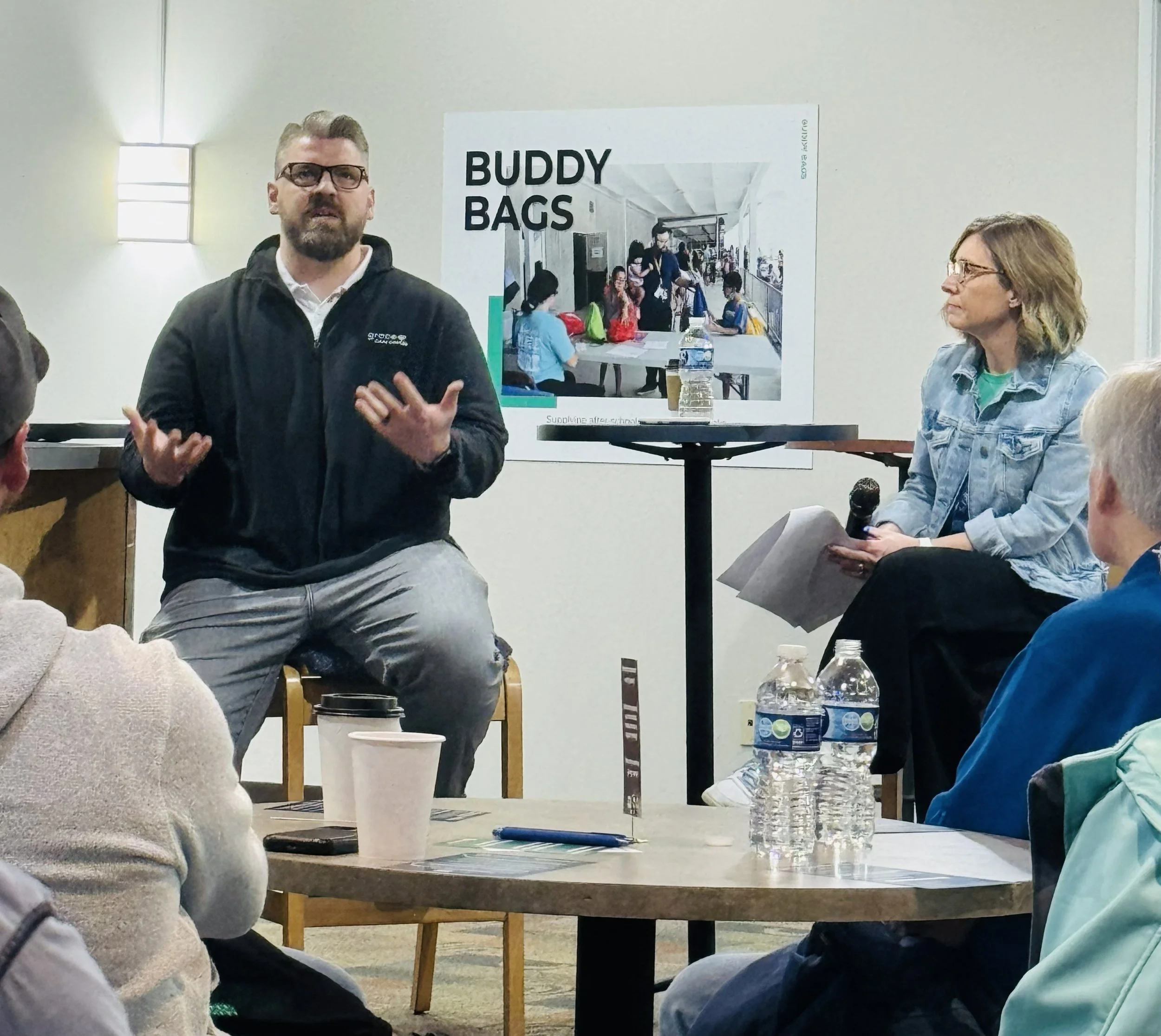
Associate Pastor of Care Center Services Jed Gaffron shared more about the program and its new designation as a United Way Center for Working Families.
Co-op participants meet twice monthly:
Financial mentoring — budgeting, debt reduction, credit repair
Life mentoring — employment, education, career advancement, emotional resilience
Milestones in the Co-op focus on building habits, accountability, and long-term support systems. The goal is not temporary relief, but lasting independence.
Currently, 77 families are actively engaged in the program with nearly 40 volunteer coaches and mentors.
Partnership with United Way
Grace Care Center has been selected as a partner in the United Way of Central Indiana’s (UWCI) Center for Working Families initiative. UWCI has set an ambitious goal to distance 10,000 households from poverty across Central Indiana.
United Way identified the Co-op as a key partner in helping make that goal possible, particularly for working families in Hamilton County.
They recognize that moving families toward long-term stability requires more than emergency assistance. It takes bundled services, like food support, financial coaching, employment advancement, and strong community partnerships.
United Way’s investment affirms what we see at Grace Care Center every day. When food assistance is paired with coaching and long-term support, families have the tools needed to secure their long-term financial success.
Are our Care Center Friends in Poverty?
Many of the families walking through the doors of Grace Care Center are not unemployed. They are not chronically homeless. They are not living in what most people picture as “poverty.”
They are working.
They are teachers’ aides. Medical assistants. Warehouse workers. Childcare providers. Retail managers. They are working full-time (sometimes two jobs) and still coming up short.
That’s where the distinction matters.
Poverty vs. ALICE
The federal poverty line measures income at a very basic survival level. It was created decades ago and is tied largely to the cost of food, not modern realities like housing, childcare, transportation, or healthcare.
If a family earns above that number, they are technically not considered to be in poverty.
But that doesn’t mean they’re financially stable.
That’s where the term ALICE comes in — Asset Limited, Income Constrained, Employed.
ALICE families:
Are working
Earn above the federal poverty line
Still cannot afford basic household necessities in their county
They may be able to cover rent or childcare. Groceries or the car repair. But not all of it at once.
Click here to read more about ALICE and see an interactive map.
In Hamilton County especially, poverty is often hidden. A family can earn two or even three times the federal poverty threshold and still be one medical bill, one job disruption, or one car breakdown away from crisis. United Way data says in Hamilton County, 25% of families are one emergency away from a financial crisis.
Who We See at Grace Care Center
Most families in the Co-Op fall into this ALICE category. They are not without income. They are often without margin.
They are:
Carrying debt from a divorce or medical emergency
Recovering from job loss
Supporting children on a single income
Navigating the system as new Americans
Paying high-interest car loans because they had no other option
Stuck in generational poverty
They are doing many things right, like working, parenting, and trying, but the math simply doesn’t work in today’s economy.
Why The Care Center’s Approach Matters
Understanding this difference changes how we see Care Center Friends.
Grace Care Center is often walking alongside people who are trying and need stability, coaching, and community to move from survival to sustainability.
Grace Care Center exists to help working families build margin, reduce debt, increase income, and create long-term independence.
Not just emergency relief, but a pathway forward.
Through this partnership with UWCI, Grace Care Center is strengthening the ability to track job placement, income growth, debt reduction, and long-term financial stability and expanding staff support to meet growing demand.
A Story of Transformation
Associate Pastor of Care Center Services Jed Gaffron shared the story of Anthony and Luce, a blended family who entered the Co-Op carrying nearly $100,000 in debt. Bankruptcy felt like their only option.
Through budgeting support, accountability, and strategic referrals, including debt counseling, they created a repayment plan instead. Anthony secured a better job. Within months, their credit improved enough to qualify for a first-time mortgage. Today, they own their first home.
Along the way, a volunteer attorney at Grace Care Center helped Anthony complete the adoption of Luce’s son. Inspired by that experience, Luce is now in law school, striving to be an attorney herself.
This is what long-term, relationship-driven support can do.
Faith in Action
Grace Care Center is rooted in faith. While participation in spiritual growth is always optional, prayer and Christ-centered care are woven into our culture.
Volunteers regularly ask, “How can I pray for you?” Over time, that consistent presence often opens doors to deeper conversations about faith and hope.
As Marcus shared, we see ourselves as a counter-system, pushing back against structures that keep families trapped in cycles of debt and instability. When someone is paying 27% interest on a car loan or facing predatory lending, they need more than encouragement. They need a community walking with them.
That’s what you make possible.
Why “The Collective” Matters
At the end of the morning, we asked attendees to reflect:
Why do you give monthly?
Many shared that while their individual gift may feel small, collectively those gifts create something powerful and sustainable.
That’s why this community is called The Collective because together, you ensure families are met with dignity, consistency, and hope every single week.
We are deeply grateful for your partnership.
If you missed this gathering, we’ll be sharing upcoming opportunities to connect, including an evening dessert gathering this spring, a documentary screening this fall, and deeper dives into the data shaping our work.
Because of you, Grace Care Center continues breaking barriers, building independence, and changing lives.
Thank you to our monthly supporters for being part of The Collective. Click here to learn more about how to join The Collective with your monthly support.
